• 0 Votes
    6 Posts
    1k Views
    ferdinandF
    Hey @kbar, Thank you for reaching out to us and the heads up, much appreciated. Looks like we forgot to update the function documentation, because the change is in the change notes. I updated the docs for the upcoming release. Cheers, Ferdinand
  • C++ SDK: Custom Branching Code Example

    Cinema 4D SDK c++ 2025
    1
    3 Votes
    1 Posts
    752 Views
    No one has replied
  • 0 Votes
    2 Posts
    527 Views
    ferdinandF
    Hello @DayDreamer, Welcome to the Maxon developers forum and its community, it is great to have you with us! Getting Started Before creating your next postings, we would recommend making yourself accustomed with our forum and support procedures. You did not do anything wrong, we point all new users to these rules. Forum Overview: Provides a broad overview of the fundamental structure and rules of this forum, such as the purpose of the different sub-forums or the fact that we will ban users who engage in hate speech or harassment. Support Procedures: Provides a more in detail overview of how we provide technical support for APIs here. This topic will tell you how to ask good questions and limits of our technical support. Forum Features: Provides an overview of the technical features of this forum, such as Markdown markup or file uploads. It is strongly recommended to read the first two topics carefully, especially the section Support Procedures: Asking Questions. About your First Question This is your first posting and you did well, but I would point you to our 'singular question' rule, as lined out above in the 'Asking Questions' link. While we usually cut user some slack regrading that, the rule exists for a reason, as topics otherwise tend to become gigantic. There are way too many questions in this topic, please split your questions into multiple topics in the future. There is no mechanism to package and ship plugins under Cinema 4D. You can just zip a plugin folder and the user unzips it then in a path where his or her Cinema 4D instance is looking for plugins. xdl64 is the extension Cinema 4D uses for libraries under Windows, i.e., it is more or less an alias for dll (our library linking is kind of special and right between static and dynamic libraries, hence the custom name). So, no, Python plugins cannot be packaged as xdl64 because Python is not compiled into machine code but interpreted at run time. You can mix C++ and Python plugins in the sense that Python plugins can depend/interact with C++ plugins with the means of the Cinema 4D API. E.g., a Python plugin can react to messages sent by a C++ plugin or data placed by a C++ plugin (or vice versa). That is how our Python API works under the hood. But C++ and Python code cannot interact directly of course, as they are vastly different languages. But you can run our Python VM from C++ and eval the results. When you want to protect your intellectual property, you can use our Cinema 4D | Extensions > Tools > Source Code Protector which will encrypt a pyp Python module. But code must of course be decrypted at runtime to be sent to the Python VM, so, this will not really stop anyone who really wants your source code (a cracker for example). C++ is the by far safer option when intellectual property is important (but also C++ can be decompiled). Cheers, Ferdinand
  • can I move objects with an external script?

    Cinema 4D SDK python 2025
    2
    0 Votes
    2 Posts
    492 Views
    i_mazlovI
    Hi @ArjenA , Welcome to the Maxon developers forum and its community, it is great to have you with us! Getting Started Before creating your next postings, we would recommend making yourself accustomed with our forum and support procedures. You did not do anything wrong, we point all new users to these rules. Forum Overview: Provides a broad overview of the fundamental structure and rules of this forum, such as the purpose of the different sub-forums or the fact that we will ban users who engage in hate speech or harassment. Support Procedures: Provides a more in detail overview of how we provide technical support for APIs here. This topic will tell you how to ask good questions and limits of our technical support. Forum Features: Provides an overview of the technical features of this forum, such as Markdown markup or file uploads. It is strongly recommended to read the first two topics carefully, especially the section Support Procedures: Asking Questions. About your First Question Unfortunately we're not able to provide you with support on designing an architecture of your application, hence my answer here is very limited. Though, you're very welcome to ask more specific questions Let's call your setup with physical board game, hardware and corresponding software as "backend" and the C4D part as "frontend". Generally speaking, there's nothing preventing you from making these parts communicating with each other and it all highly depends on your project setup: programming languages, physical interfaces, frameworks, etc that you're going to use. You can start with saving your live data in a file on your disk filesystem and read it using Python API in cinema. Once you have a proof of concept you can start optimizing, for example, by implement a proper communication interface, for example, REST API or Websocket sound like good (but not the only!) candidates for this purpose. With that's said, I wish you luck with your project. Feel free to make new postings with singular and more specific questions. Cheers, Ilia
  • 0 Votes
    6 Posts
    1k Views
    kbarK
    @freeze I wrote this a few years back which might give you a good starting point. https://plugins4d.com/Product/FunRay https://github.com/kentbarber/rtow4d Cheers, Kent
  • 0 Votes
    3 Posts
    567 Views
    F
    @ferdinand Thank you for replying!
  • Python generator

    Cinema 4D SDK 2025 python
    3
    0 Votes
    3 Posts
    577 Views
    J
    @i_mazlov Thanks for your help. I using visual studio code as you suggested and am getting to grips with the Drag and Drop to assist with parameter getting and setting.
  • Help with Attribute Manager History

    Cinema 4D SDK windows python 2025
    2
    0 Votes
    2 Posts
    378 Views
    i_mazlovI
    Hi @kimberlyhtown, Welcome to the Maxon developers forum and its community, it is great to have you with us! Getting Started Before creating your next postings, we would recommend making yourself accustomed with our forum and support procedures. You did not do anything wrong, we point all new users to these rules. Forum Overview: Provides a broad overview of the fundamental structure and rules of this forum, such as the purpose of the different sub-forums or the fact that we will ban users who engage in hate speech or harassment. Support Procedures: Provides a more in detail overview of how we provide technical support for APIs here. This topic will tell you how to ask good questions and limits of our technical support. Forum Features: Provides an overview of the technical features of this forum, such as Markdown markup or file uploads. It is strongly recommended to read the first two topics carefully, especially the section Support Procedures: Asking Questions. About your First Question I suppose you're asking about the Attribute Manager history, which one can access by using the following arrows: [image: 1738944299742-bf4e829b-8ae1-4eae-a86b-c8dbc57c713d-image.png] Unfortunately, no. the Attribute Manager is a quite complex part of C4D (e.g. with multiple AM having each their own history), hence it is not transparently exposed to our public SDK and one's typically limited by the functionality listed in our C++ SDK the AOM part: Active Object Manager. Cheers, Ilia
  • Start IPR rendering in the viewport

    Cinema 4D SDK windows c++ 2025
    5
    0 Votes
    5 Posts
    697 Views
    F
    @ferdinand Thank you for answering ,I 'll try it.
  • 0 Votes
    4 Posts
    1k Views
    ferdinandF
    Hello everyone, we have moved this topic to a mail discussion, when there are outcomes relevant for other developers, I will post them here. Cheers, Ferdinand
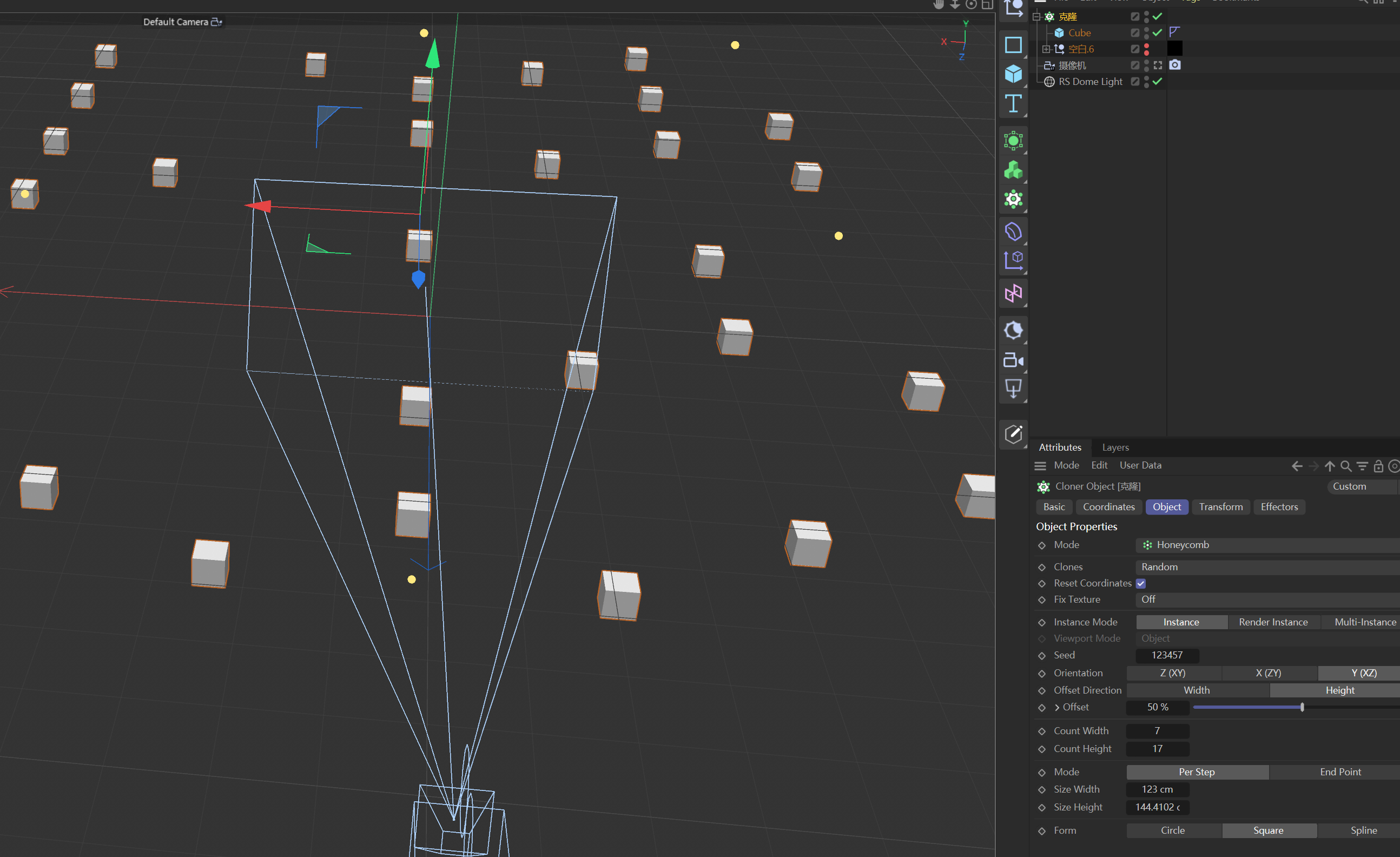
  • Get the random result of Cloner Object

    Cinema 4D SDK c++ 2025 windows
    9
    2
    0 Votes
    9 Posts
    1k Views
    F
    @ferdinand Thank you very much! The problem is solved and now I know the way of MODATA_CLONE used.
  • 0 Votes
    5 Posts
    827 Views
    ferdinandF
    Good to hear!
  • 0 Votes
    6 Posts
    1k Views
    ferdinandF
    Hello @uogygiuol, Thank you for the added details. Yes, reducing the complexity of questions is the right thing to do, thank you for doing tit. Essays are counterproductive, as we then tend to overlook things (q.e.d., I overlooked the fact that you wanted to mangle the scene file in this thread). In general, trying to mangle a file beforehand is not a good route, as you always risk invalidating the file. For your very specific scenario - very simple scene graph, just geometry, no materials, animations or other dependencies - it could make sense. I briefly talked with the owner of our GLTF-importer, and we do not do any sanity checking, e.g., comparing nodes with meshes. So, you could just 'clean up' the scene graph ("nodes") of the file, and Cinema's GLTF importer will then just ignore extra data in fields such as "meshes". How fruitful this will be, you will have to find out yourself. I already had the hunch that your are here surfing on the edge of what is sensbible, and GLTF JSON files which translate to gigabytes of memory are certainly an edge case, due to the fact that text-based file formats are usually a bad choice for such heavy data. Using Python to Read JSON My guesstimate would be that when you throw a GLTF JSON file at Python's JSON parser - which takes five minutes to load in Cinema 4D - to mangle it, you end up with a net-loss or tie, because you loose most or more than the won time in that Python JSON stage. Python's json module is mostly written in C to make it performant, but that is still a lot of JSON to deserialize, modify, and then serialize. One idea could be to use re, i.e., regular expressions, to find the "nodes" section in that file, just deserialize that from JSON, modify it, serialize back to a JSON string, and write it back in place, and by that sidestep having to deserialize that whole file. The problem with all that is that json.load allows you to pass a file object, allowing you to bypass the Python VM entirely and let the data reside in C until the parsing is done, while re does not allow you to regex a file object directly (AFAIK), you always must read the file object into lines or chunks to then pass these strings to the re module. I.e., you would have to load that whole file into a Python string first. What would come here out on top, I have no clue, but my hunch is that re might loose, as Python's string handling is not the fastest. Alternatives might be 3rd party libs such as isjon (a lazy JSON loader) but I do not know how performant it is. For this section it would make a huge difference if you could predict the position of "nodes" in the file, either exactly as a chunk offset, or in the form of 'I know that it is always very close to the end, so let's regex parse the file in reverse'. Using a Binary File Format But the fact remains that text-format file types, e.g., JSON GLTF, become extemely ineffcient once you pass the ~100 MB barrier. Using something like binary GLTF or another binary format such as FBX will likely speed up your Cinema 4D loading times quite a bit, no extra steps required. And to be clear, text-based file formats are always wildely ineffcient. It is just that below the ~100 MB barrier (adjust for the beefiness of your machine), you can drown that inefficency with pure computing power and have the nice advantage of a human-readble file format. Cheers, Ferdinand

  • 0 Votes
    2 Posts
    427 Views
    i_mazlovI
    Hi @derudo, Welcome to the Maxon developers forum and its community, it is great to have you with us! Getting Started Before creating your next postings, we would recommend making yourself accustomed with our forum and support procedures. You did not do anything wrong, we point all new users to these rules. Forum Overview: Provides a broad overview of the fundamental structure and rules of this forum, such as the purpose of the different sub-forums or the fact that we will ban users who engage in hate speech or harassment. Support Procedures: Provides a more in detail overview of how we provide technical support for APIs here. This topic will tell you how to ask good questions and limits of our technical support. Forum Features: Provides an overview of the technical features of this forum, such as Markdown markup or file uploads. It is strongly recommended to read the first two topics carefully, especially the section Support Procedures: Asking Questions. About your First Question There's no single known "thing" we're aware of that could lead to such behavior. In other words, it can be lots of different "things" that caused the symptoms you're describing. Hence, without any further details everything I'm pointing out here is highly speculative. I also don't think answering the question "What could have happened?" is by any means productive, so let's switch the point of view to "How one could diagnose it?". Since you haven't posted any console output in your question, I assume you haven't checked that. This would actually be the first thing to check. Please refer to our Python Console Manual and searching on the forum. Next, try to figure out if it's only UI that stopped appearing or your plugin isn't registered at all anymore. You can do this by checking (e.g. with some temporary print statements) if you plugin is actually functional. On the screenshot you've posted the structure is kind of strange, but we're not sure if it's just a visualization matter of your software. Namely, the plugin.pyp file is expected to reside in the root of the plugin folder. Essentially, the following hierarchy level is not supposed to be there: [image: 1737450594273-232c47cd-171e-4642-8c12-7661b51e6ce5-image.png] Please refer to the article Plugin Structure Manual: Directory Structure and double check your plugin in this regard. If the points above don't lead to any result, try debugging it step-by-step. Namely, strip out everything except the essentials (like plugin registration) and continue adding things piece-by-piece until it starts failing. By the way, one can easily achieve this by using any version control system (e.g. git), as they typically provide a lossless way to manage your code (i.e. remove and add parts of code, without being worried to lose any of them). This approach could also have prevented your scenario in first place, when something stopped working and there're no clues about the change that has lead to it. If this still doesn't help, you can share your plugin here (or send us via contact form, when confidential information is involved). However, I must warn you that our Support Procedures still fully apply, namely: We cannot debug your code for you and instead provide answers to specific problems. Cheers, Ilia
  • 0 Votes
    2 Posts
    555 Views
    ferdinandF
    Hello @myosis, Welcome to the Maxon developers forum and its community, it is great to have you with us! Getting Started Before creating your next postings, we would recommend making yourself accustomed with our forum and support procedures. You did not do anything wrong, we point all new users to these rules. Forum Overview: Provides a broad overview of the fundamental structure and rules of this forum, such as the purpose of the different sub-forums or the fact that we will ban users who engage in hate speech or harassment. Support Procedures: Provides a more in detail overview of how we provide technical support for APIs here. This topic will tell you how to ask good questions and limits of our technical support. Forum Features: Provides an overview of the technical features of this forum, such as Markdown markup or file uploads. It is strongly recommended to read the first two topics carefully, especially the section Support Procedures: Asking Questions. About your First Question All the methods you list simply do not exist (neither in C++ nor in Python), see c4d.utils.Neighbor for the type overview. I therefore must assume that you are using an AI, like, for example, ChatGPT, which hallucinated these methods. Please note that we reserve the right to refuse support when confronted with undisclosed AI gibberish, especially for beginner content. Always state when you used an AI to generate code. Something such as an edge does not exist concretely in our API and many other APIs, i.e., other than for points and polygons, there is no explicit data type for edges which would be stored. Edges are defined implicitly by CPolygon. To filter a selection for edges of a certain length, you would have to convert edge indices to polygon and point indices and then measure the distance between the relevant points. Cheers, Ferdinand Result [image: 1737027755224-074e2ada-a9ce-45b4-800a-acf7e060941a-image-resized.png] Code """Deselects all edges in the edge selection of the active object whose edge length exceeds MAX_EDGE_LENGTH. Must be run as a Script Manager script with an editable polygon object selected. """ import c4d doc: c4d.documents.BaseDocument # The currently active document. op: c4d.BaseObject | None # The primary selected object in `doc`. Can be `None`. MAX_EDGE_LENGTH: float = 25.0 # The maximum length of an edge before to be considered too long. MAX_EDGE_LENGTH_SQUARED: float = MAX_EDGE_LENGTH ** 2 # The square of `MAX_EDGE_LENGTH`. def main() -> None: """Called by Cinema 4D when the script is being executed. """ if not op or not op.IsInstanceOf(c4d.Opolygon): raise ValueError("The selected object is not a polygon object.") # Get the edge selection of the object and turn it into a list of selected edges indices. Also, # get the points and polygons of the object. selection: c4d.BaseSelect = op.GetEdgeS() selectedEdges: list[int] = [i for i in range(op.GetEdgeCount()) if selection.IsSelected(i)] points: list[c4d.Vector] = op.GetAllPoints() polygons: list[c4d.CPolygon] = op.GetAllPolygons() def getPointByIndex(poly: c4d.CPolygon, index: int) -> c4d.Vector: """Returns the point of the polygon at the given index. CPolygon has no index access, so we fix that here. """ if index == 0: return points[poly.a] elif index == 1: return points[poly.b] elif index == 2: return points[poly.c] elif index == 3: return points[poly.d] # Iterate over the edges and find the one's that are longer than MAX_EDGE_LENGTH. An edge index # is defined as: # # "The edges are indexed by 4 * polygon + edge where polygon is the polygon index and edge is # the edge index between 0 and 3." # # So, we must revert that here, then measure the edge length, and collect all too long edges. tooLongEdges: list[int] = [] for edgeIndex in selectedEdges: polygonIndex: int = edgeIndex // 4 edgeInPolygonIndex: int = edgeIndex % 4 poly: c4d.CPolygon = polygons[polygonIndex] pointA: c4d.Vector = getPointByIndex(poly, edgeInPolygonIndex) pointB: c4d.Vector = getPointByIndex(poly, (edgeInPolygonIndex + 1) % 4) # Getting the length of a vector is quite expensive, so we compare the squared lengths. edgeLengthSq: float = (pointA - pointB).GetLengthSquared() if edgeLengthSq > MAX_EDGE_LENGTH_SQUARED: tooLongEdges.append(edgeIndex) # Print the indices of the edges that are too long. print("The following edges are too long:", tooLongEdges) # Deselect all edges in the object's edge selection that are too long. for edgeIndex in tooLongEdges: selection.Deselect(edgeIndex) # Push an update event to Cinema 4D to redraw the object. c4d.EventAdd() if __name__ == '__main__': main()
  • How to get the attributes of rsramp node in c++?

    Cinema 4D SDK c++ 2025
    3
    0 Votes
    3 Posts
    529 Views
    F
    @ferdinand Thank you for the answer! The problem is solved after I try to find the child of the port according to your answer.
  • 0 Votes
    3 Posts
    510 Views
    chuanzhenC
    @ferdinand Thank you for your detailed answer.
  • 0 Votes
    4 Posts
    670 Views
    i_mazlovI
    Hi @mia-elisenberg, Thanks for reaching out to us! I must note that as per our Support Procedures we cannot debug your code. Hence, in your future postings I kindly ask you to try simplifying your code to a minimal viable example, which highlights your question. Regarding your question, creating keyframes for nodes can be a little trickier comparing to the ordinary objects, but the general data accessing scheme stays the same. @Dunhou has thankfully posted the simplified example for your question, which already shows crucial pieces of how one would access the CTrack, CCurve and CKey for the node port. (@Dunhou I won't get tired showing our appreciation in playing an active role in our community! ). Namely, you're expected to use GetBaseListForNode to get the BaseList2D element that corresponds to the node you have. Additionally, NimbusBaseInterface.GetDescID can be used to get the DescID of the port. After you have this information, the process of interacting with animation data isn't any different. Your can check the animation examples in our repository: Cinema-4D-Python-API-Examples/scripts/04_3d_concepts/scene_elements /animation. The only thing I'd like to point out here is handling color data. Namely, CKey is designed to operate with float values, but Opacity channel works with color data. Hence, you need to create a separate CTrack for each color channel. You basically do this by pushing your DescID one level further to access the elements of your color data. Please find small example below (based on the code shared by @Dunhou): descLevelsRGB: list[c4d.DescLevel] = [ c4d.DescLevel(c4d.COLOR_R, c4d.DTYPE_REAL, 0), c4d.DescLevel(c4d.COLOR_G, c4d.DTYPE_REAL, 0), c4d.DescLevel(c4d.COLOR_B, c4d.DTYPE_REAL, 0) ] opacityValue: list[float] = [0.55, 0.66, 0.77] # example data to store in the keyframe ctime: c4d.BaseTime = c4d.BaseTime(doc.GetTime().GetFrame(doc.GetFps()), doc.GetFps()) for opacityChannelDescLevel, opacityChannelValue in zip(descLevelsRGB, opacityValue): # Get opacity channel DescID and push it to access color channel channelDescID: c4d.DescID = nimbusRef.GetDescID(opacityPort.GetPath()) channelDescID.PushId(opacityChannelDescLevel) track: c4d.CTrack = c4d.CTrack(opacityPortBL2D, channelDescID) opacityPortBL2D.InsertTrackSorted(track) curve: c4d.CCurve = track.GetCurve() key = c4d.CKey() track.FillKey(doc, opacityPortBL2D, key) # this is optional key.SetValue(curve, opacityChannelValue) key.SetTime(curve, ctime) curve.InsertKey(key) Cheers, Ilia
  • About Texture Paths in MergeDocument

    Cinema 4D SDK 2025 python windows
    3
    0 Votes
    3 Posts
    573 Views
    R
    @i_mazlov I get it, thanks for your reply.
  • 0 Votes
    5 Posts
    941 Views
    gheyretG
    I get it, thanks for your reply and keeping the idea. If there are any workarounds or alternative solutions in the meantime, please let me know. I look forward to any updates regarding this feature in the future. Cheers~