#include <apibaseid.h>
Detailed Description
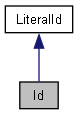
Id represents an identifier consisting of a c-string. Such identifiers are used mainly to identify entities such as interfaces, components, classes, registries, entries, modules or published objects.
Public Member Functions | |
| constexpr | Id () |
| Id (const volatile Char *str) | |
| template<UInt N> | |
| constexpr | Id (const Char(&str)[N]) |
| Id (Id &&other) | |
| Id (const Id &other) | |
| ~Id () | |
| void | Reset () |
| MAXON_OPERATOR_MOVE_ASSIGNMENT (Id) | |
| Id & | operator= (const Id &other) |
| ResultMem | Init (const Char *str, Bool copyString) |
| ResultMem | Init (const Block< const Char > &str) |
| ResultMem | Init (const CString &str) |
| ResultMem | Init (CString &&str) |
| ResultMem | Init (const String &str) |
| void | Init (const InternedId &id) |
| void | InitReference (const Char *str) |
 Public Member Functions inherited from LiteralId Public Member Functions inherited from LiteralId | |
| constexpr | LiteralId () |
| constexpr | LiteralId (const LiteralId &)=default |
| MAXON_IMPLICIT | LiteralId (const Id &)=delete |
| constexpr LiteralId & | operator= (const LiteralId &)=default |
| LiteralId & | operator= (const Id &)=delete |
| template<UInt N> | |
| constexpr | LiteralId (const Char(&str)[N]) |
| Bool | operator== (const LiteralId &other) const |
| Bool | operator< (const LiteralId &other) const |
| MAXON_OPERATOR_COMPARISON (LiteralId) | |
| COMPARERESULT | Compare (const LiteralId &other) const |
| constexpr HashInt | GetHashCode () const |
| UniqueHash | GetUniqueHashCode () const |
| constexpr Bool | IsEmpty () const |
| constexpr Bool | IsPopulated () const |
| constexpr const Char * | GetCString () const |
| constexpr Int | GetCStringLength () const |
| String | ToString (const FormatStatement *formatStatement=nullptr) const |
| CString | ToCString () const |
| Block< const Char > | ToBlock () const |
| const Id & | Get () const |
| operator const Id & () const | |
| Bool | UsesStrongReference () const |
| template<UInt N> | |
| constexpr | LiteralId (bool dummy, const Char(&str)[N]) |
| constexpr | LiteralId (bool dummy, const LiteralId &src) |
| template<typename T , typename = typename T::DeclarationHelper> | |
| constexpr | LiteralId (bool dummy, const T &decl) |
| template<typename T , typename = typename T::DeclarationHelper> | |
| constexpr | LiteralId (int dummy, const T &decl) |
| template<typename T , typename = typename std::enable_if<std::is_base_of<InternedIdFidBase, T>::value>::type> | |
| Bool | operator== (const T &other) const |
| template<typename T , typename = typename std::enable_if<std::is_base_of<InternedIdFidBase, T>::value>::type> | |
| Bool | operator!= (const T &other) const |
Static Public Member Functions | |
| static MAXON_ATTRIBUTE_FORCE_INLINE const Id & | DefaultValue () |
| template<typename... INPUTTYPE> | |
| static Result< Id > | Create (INPUTTYPE &&... inputId) |
| Static Public Member Functions inherited from LiteralId | |
| static constexpr HashInt | GetHashCode (const Char *str) |
Private Member Functions | |
| Id (const CString &)=delete | |
| void | AddStrReference () |
| void | RemoveStrReference () |
Additional Inherited Members | |
| Static Public Attributes inherited from LiteralId | |
| static const Int | MAX_LENGTH_EXPONENT |
| static const UInt | LOW_HASH_MASK |
| static const Int | MAX_LENGTH |
| Protected Member Functions inherited from LiteralId | |
| constexpr | LiteralId (const Char *value, UInt hash) |
| LiteralId (ENUM_DONT_INITIALIZE) | |
| Protected Attributes inherited from LiteralId | |
| const Char * | _value |
| UInt | _hash |
| Static Protected Attributes inherited from LiteralId | |
| static const Int | RC_STRING_BIT |
| static const UInt | RC_STRING_MASK |
| static const UInt | HASH_MASK |
Constructor & Destructor Documentation
◆ Id() [1/6]
◆ Id() [2/6]
Constructs an Id for a given c-string. str is used directly for the internal c-string pointer.
- Warning
- The c-string has to exist at least as long as the constructed Id. If you can't guarantee that, you have to use the Init function.
- Parameters
-
[in] str Identifier as c-string, may be nullptr. This will always be used directly, i.e., no copy is made.
◆ Id() [3/6]
◆ Id() [4/6]
◆ Id() [5/6]
◆ ~Id()
◆ Id() [6/6]
Member Function Documentation
◆ DefaultValue()
|
static |
◆ Reset()
| void Reset | ( | ) |
Resets the Id. Afterwards, its internal c-string will be nullptr.
◆ MAXON_OPERATOR_MOVE_ASSIGNMENT()
| MAXON_OPERATOR_MOVE_ASSIGNMENT | ( | Id | ) |
◆ operator=()
◆ Init() [1/6]
Sets this Id to a new value. If copyString is false, str is used directly for the internal c-string pointer, and it is assumed that the c-string exists at least as long as this Id. Otherwise, if copyString is true, a copy of str is created and held by a strong reference.
- Parameters
-
[in] str Identifier as c-string, may be nullptr. [in] copyString If true, a copy of str is made at first (and then held by a strong reference).
- Returns
- False if a copy had to be made, but the allocation failed. True otherwise.
◆ Init() [2/6]
Sets this Id to str. A copy of str is created and used for the internal c-string (as a strong reference).
- Parameters
-
[in] str Identifier as a block of characters (no null termination required).
- Returns
- False if a copy had to be made, but the allocation failed. True otherwise.
◆ Init() [3/6]
◆ Init() [4/6]
◆ Init() [5/6]
◆ Init() [6/6]
| void Init | ( | const InternedId & | id | ) |
◆ InitReference()
| void InitReference | ( | const Char * | str | ) |
◆ Create()
◆ AddStrReference()
|
private |
◆ RemoveStrReference()
|
private |